Risk Management: Dealing with Rain, Delays, and 'Runaway' Toasts

Every wedding day has at least one thing that does not go exactly as planned. The couples who experience these moments as minor inconveniences rather than crises are not the ones who had perfect circumstances. They are the ones who planned for imperfection in advance.
Risk management in wedding planning is not pessimism. It is the recognition that complex events with many people and many moving parts are going to produce variations from the plan, and that deciding how to respond before those variations occur is significantly less stressful than deciding in the moment.
Rain and Weather
An outdoor ceremony or reception with no rain contingency is a significant planning gap. A backup plan for weather does not have to be elaborate, but it needs to be decided, communicated to vendors, and understood by the couple and coordinator before the day.
Tent rental is the most comprehensive weather solution and the most expensive. A tent that can be erected on short notice is rarely an option: most tent rentals require booking months in advance and erection the day before the event. If the outdoor space matters enough to need protecting, the tent decision needs to be made as a planning decision, not a day-of decision.
An indoor backup space is a simpler and more commonly available option for venues with both indoor and outdoor areas. Confirm with your venue exactly what the backup space is, how quickly it can be transitioned, and what the trigger point is for making the call. Decision authority and timing should be established in advance so the coordinator can act without needing to convene a discussion while guests are arriving.
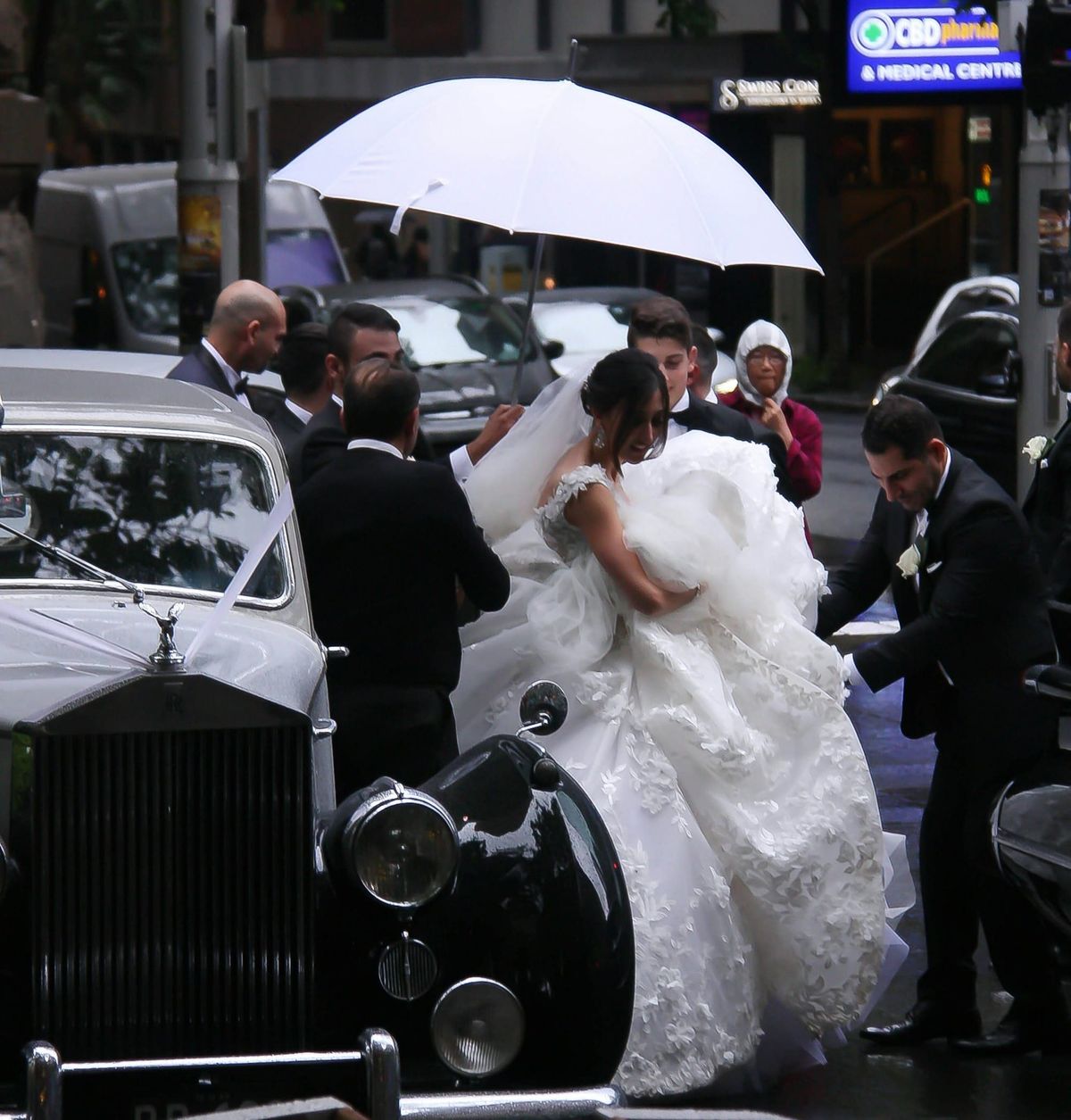
For ceremonies that proceed outdoors in light rain, a contingency for managing guests, providing umbrellas, or adjusting the setup should be agreed to before the day.
Timeline Delays
The most common form of delay is the getting-ready schedule running late. This has downstream effects on ceremony start time, portrait windows, and cocktail hour. Managing this requires the same buffer approach described in the timeline section of this guide: plan for everything to take slightly longer than expected.
When delays occur despite buffer time, decisions need to be made about what gets compressed or cut. Identify in advance which elements of the day are negotiable and which are not. A portrait session can be shortened. A cocktail hour can be slightly reduced. The ceremony itself almost always stays close to its scheduled start time to avoid venue complications and out of courtesy to waiting guests. Knowing this hierarchy before the day means adjustments can be made quickly when they are needed.
Vendor Issues
Vendor emergencies, while uncommon, do happen. A DJ who becomes ill. A photographer whose car breaks down. A florist whose delivery runs significantly late. The right response to each of these depends on the vendor's own backup plan, which is why asking every vendor about their emergency protocol before booking is important rather than purely hypothetical.
Confirm that your coordinator or point-of-contact has every vendor's direct mobile number and that communication protocols are clear. A vendor who cannot reach your coordinator and vice versa is a problem that a simple address book could prevent.
Toast Management
Unrehearsed, open-ended toasts are one of the more reliably disruptive variables of a wedding reception. A toast that runs 12 minutes when the reception is already behind schedule, or that becomes emotionally charged in an unexpected direction, creates a recovery challenge for the DJ, the coordinator, and the couple.
Brief every toast-giver in advance with a time guideline of two to four minutes. Designate the DJ or coordinator as the person who will gently signal the end of a toast that has run significantly over. Having a designated person take responsibility for this removes the couple from needing to manage it themselves.
It is also worth knowing that the most memorable toasts are almost never the longest. Specificity and warmth matter more than length.
Use the Planner Checklist and Wedding Events sections in The Planned Wedding to document your contingency plans alongside your main schedule. Open the app.

